The consultation model
How the Vitelo consultation is intended to work
The Vitelo model is designed to address a specific clinical problem: the delay between a patient presenting with symptoms and a specialist reaching a diagnosis. By connecting a local doctor and a remote specialist in real time, with investigations performed at the bedside, the model is intended to make a single-visit diagnosis achievable.
Background
The principle
In a conventional referral pathway, a patient may wait weeks or months between a general practitioner's referral and a specialist appointment, and further time before investigation results are available. The Vitelo model is designed to compress this pathway into a single consultation, without requiring the patient to travel to a specialist centre.
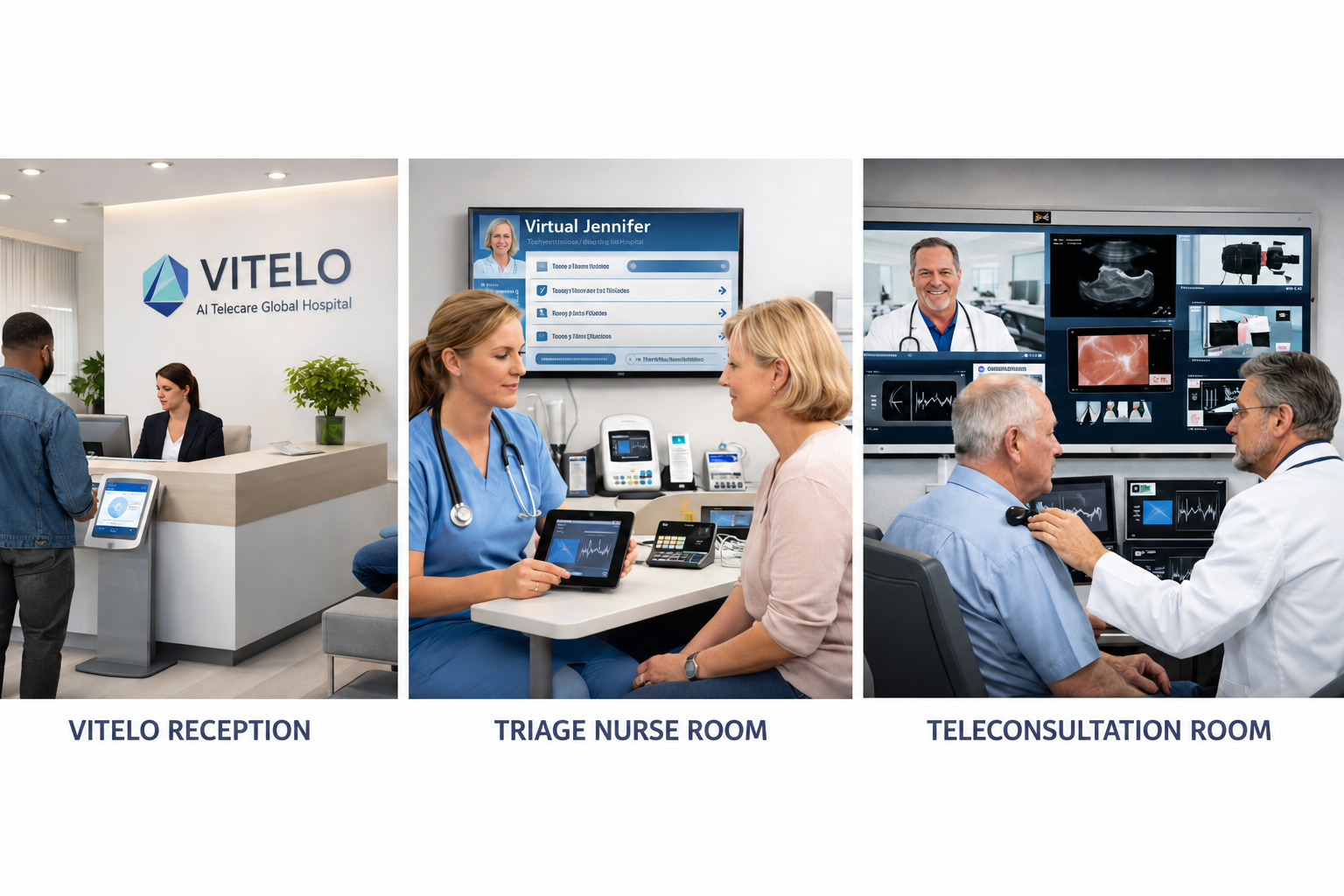
The consultation sequence
Four stages of the intended consultation
The patient is registered and a history is taken
Before the consultation, the Vitelo Virtual Nurse is intended to take a structured clinical history from the patient. This information is organised and made available to both the local doctor and the remote specialist before the examination begins, so that the consultation can proceed efficiently.
AI tools are intended to assist the Virtual Nurse in structuring the history. AI does not replace clinical judgement. A qualified clinician is responsible for every clinical decision.
A local doctor examines the patient in real time
A qualified local doctor conducts a physical examination of the patient at the point of care. The examination is observed live by the remote specialist via a secure clinical video connection. The local doctor acts under the direct clinical direction of the specialist throughout the consultation.
Bedside investigations are performed during the visit
Where investigations are required, they are performed at the bedside during the same consultation. Results are made available to the specialist in real time, enabling clinical interpretation without the need for a separate appointment.
A diagnosis and treatment plan are reached in a single visit
With examination findings and investigation results available within the same session, the remote specialist is able to reach a diagnosis and agree a treatment plan before the consultation ends. A written clinical record is produced and made available to the patient and their referring clinician.
Clinical roles
The roles within the consultation
The Vitelo model involves three distinct clinical roles, each with defined responsibilities.
Local doctor
A qualified doctor present with the patient at the point of care. The local doctor conducts the physical examination, performs or supervises bedside investigations, and communicates the specialist's clinical direction to the patient. The local doctor is a registered medical practitioner.
Remote specialist
A qualified specialist who observes the consultation live and provides clinical direction to the local doctor. The remote specialist is responsible for the clinical assessment, the interpretation of investigation results, and the diagnosis and treatment plan. A qualified clinician is responsible for every clinical decision.
Vitelo Virtual Nurse
An AI-assisted agent intended to take a structured clinical history before the consultation. The Virtual Nurse organises patient information to support the efficiency of the consultation. AI supports the nurse in structuring information; it does not replace clinical judgement, and a qualified clinician reviews all clinical information.

Vitelo is not an emergency service. If you or someone in your care requires urgent or emergency medical attention, contact your local emergency services immediately.
Find out more or make an enquiry
For patients and referrers
For patients and referrers seeking further information about the Vitelo model, contact us to discuss whether the service may be appropriate.
For hospital and clinic partners
For hospitals and clinic groups interested in the Vitelo partnership model, we welcome your enquiry.